


An excavator depends on hydraulic oil and hydraulic hoses to transfer power from its pumps to the bo...
The Grand Egyptian Museum Opens: A Wonder Beside the Pyramids
Nov 03 2025
By

On November 4, 2025, Egypt officially opened the Grand Egyptian Museum (GEM)—the largest archaeological museum complex ever built—set dramatically between Cairo and the Giza Pyramids.
The grand ceremony, attended by President Abdel Fattah El-Sisi, His Highness Mansour bin Zayed bin Sultan Al Nahyan, the Vice President of the UAE, and numerous world leaders, marked not only a cultural milestone but a remarkable feat of engineering and logistics spanning over two decades.
Building the World’s Largest Museum
Design and Vision
Designed by Heneghan Peng Architects after an international competition, the Grand Egyptian Museum covers nearly 490,000 m²—its polished stone façade echoing the geometry of the nearby pyramids. The structure blends desert sand tones, vast glass walls, and precise sightlines that frame one of the Seven Wonders of the Ancient World.

A project of this scale calls for an impressive fleet of heavy machinery. Here’s how heavy equipment fits into the equation — and the vital roles that heavy equipment dealers, and heavy machinery rental play along the way.
Construction and Machinery Powering the Project
Behind the serene façade was a colossal construction effort led by BESIX and Orascom Construction under the supervision of Hill International and EHAF Consulting Engineers.

To raise the museum’s steel and concrete shell—some sections towering over 45 meters—contractors relied on a fleet of cranes, especially mobile cranes, and high-capacity excavators from various dealers.
- Crawler cranes lifted the massive roof trusses and the 83-ton statue of Ramesses II into its permanent place beneath the atrium skylight.
- Boom lifts and scissor lifts were essential for façade installation and precision glazing work on the museum’s translucent walls.
- During foundation works, heavy-duty excavators, bulldozers, and dump trucks shaped the terraced site overlooking Giza.
- Low-bed trailers and self-propelled modular transporters (SPMTs) carried oversized architectural elements and artifacts under tight control.
The use of Autodesk BIM and Dynamo technologies allowed engineers to coordinate every bolt, beam, and transport route digitally—essential in Cairo’s demanding heat and complex topography.
Engineering the Move: Transporting Egypt’s Treasures
The museum’s creation was not only about building a new home—it was about moving history itself.
The Ramesses II Relocation
In a historic engineering operation, an 83-ton granite statue of Ramesses II was transferred from Ramses Square in central Cairo to the museum’s grand hall.
The journey used a custom-built hydraulic platform trailer, vibration-controlled supports, and an escort of engineers and conservators. Temperature sensors and laser alignment systems ensured that no stress was transferred to the 3,200-year-old artifact during transport

Tutankhamun and Other Collections
Over 50,000 artifacts, including the complete Tutankhamun collection of 5,398 items, were meticulously packed, stabilized, and moved from the Egyptian Museum in Tahrir Square and various storage sites.
Each artifact traveled in climate-controlled transport cases designed to regulate humidity and absorb shocks.
Large sarcophagi and gilded wooden shrines required forklifts, gantry cranes, and pneumatic lifting frames to be carefully lowered into new display mounts prepared inside the GEM’s conservation laboratories—the largest in the Middle East.

The operation, managed with Autodesk simulation software and on-site digital monitoring, is considered one of the most sophisticated artifact relocations ever attempted.
Inside the Museum
Visitors are greeted by the monumental staircase, flanked by colossal statues that guide them through galleries arranged by theme: Society, Royalty, and Beliefs.
Light filters softly through the façade, designed to preserve delicate pigments and papyrus while framing uninterrupted views of the pyramids.

The centerpiece—the Tutankhamun Hall—spans 7,500 m², displaying the boy king’s treasures together for the first time in history. Beyond that, conservation wings, educational spaces, and landscaped gardens complete the museum’s vision as a living cultural hub rather than a static repository.
A Gathering of Nations
The opening night drew a constellation of dignitaries and leaders from around the world.
Among them were representatives from UNESCO, the British Museum, and the Louvre, alongside ambassadors, scholars, and museum directors.

The event featured musical performances celebrating Egypt’s artistic heritage, followed by a private tour of the galleries—culminating with the unveiling of Tutankhamun’s golden mask under carefully balanced light.
A Legacy for Generations
The Grand Egyptian Museum stands as a bridge between ancient innovation and modern engineering.
From the cranes that raised its walls to the precise machines that carried its priceless contents, the project demonstrates how technology and heritage can coexist in harmony.
Partner with the best. Al Marwan Machinery stands among the GCC
Frequently Asked Questions
Where is the Grand Egyptian Museum (GEM) located?
The museum is strategically situated between the city of Cairo and the Giza Pyramids, offering a direct panoramic view of the three Great Pyramids.
What types of heavy equipment were used in the museum's construction?
The project required a diverse fleet, including crawler cranes for heavy lifting, powerful excavators for foundation work, and forklifts for the precise movement of archaeological artifacts.
Can similar equipment to that used for the museum be found in the region?
Yes, leading companies like Al Marwan offer a wide range of options for those looking for heavy equipment for sale or heavy equipment for rent in the GCC, supporting major construction projects with the same level of efficiency.
What makes the Tutankhamun gallery at the museum unique?
The gallery spans 7,500 square meters and displays the complete collection of the Golden King for the first time in history, featuring over 5,000 artifacts in a single location.
Al Marwan Machinery
Leading heavy machinery provider in the GCC since 1978. Recognized as the GCC Rental Company of the Year for three consecutive years (2023, 2024, 2025), Al Marwan is the trusted one-stop shop for construction projects across the UAE, Saudi Arabia, and Oman. As an authorized dealer for brands like Kobelco, Powerscreen, Dynapac, Sinoboom, Socma, and CIFA, we offer a comprehensive suite of services covering the entire machinery lifecycle:
- New Heavy Equipment: As an authorized dealer, Al Marwan offers access to the latest models of excavators, crawler cranes, crushers, concrete pumps, and more. All new machinery comes backed by manufacturer warranties.
- Heavy Equipment Rental Fleet: Access one of the largest construction equipment rental fleets in the Middle East, featuring 3500+ machines and certified operators. This allows clients to scale operations efficiently, minimizing capital expenditure.
- Used Heavy Equipment: We offer a curated selection of used equipment from global leaders like Caterpillar, Volvo, Komatsu, and Hitachi. Each piece undergoes rigorous inspection and maintenance to guarantee optimal performance and reliability.
- Expert Support & Maintenance: Al Marwan provides comprehensive after-sales support and maintenance services to ensure the long-term performance and reliability of your investments.
LEARN FROM OUR INDUSTRY EXPERTS
Latest news & updates

Why Hydraulic Oil Temperature Matters in Excavators
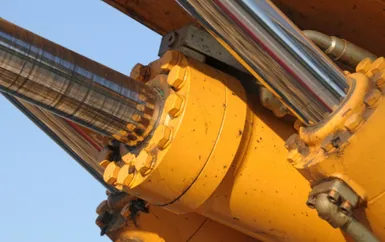
How to Spot Heavy Machinery Fluid Leaks Before They Cause Downtime
A sudden fluid puddle under a digger, loader, or earthmover is an immediate signal that a critical i...
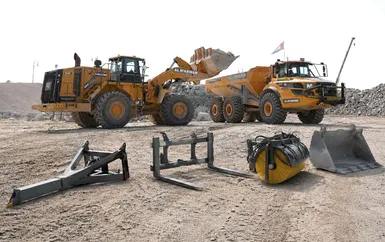
Wheel Loader Attachments That Turn One Machine Into Five
A wheel loader is already one of the most useful machines on any construction site. It loads, carrie...
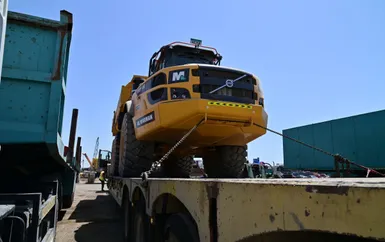
The Ultimate Guide to Buying an Articulated Dump Truck: Critical Tips
Investing in heavy machinery is one of the most significant capital expenditures a business can make...
The Loader Operator’s Blind Spot: Why Visibility Can Make or Break Site Safety
Wheel loaders are among the busiest machines on construction sites. They load trucks, move aggregate...
