


Bulldozers are among the most important machines on UAE construction sites, especially for earthmovi...
Construction in Preparation of FIFA World Cup 2034 Saudi
Jan 04 2024
By

In alignment with the Saudi Vision 2030, initiated in 2016 to transform the kingdom into a dynamic economy and regional leader, Saudi Arabia is now on a fast track to reshape its identity. Central to this vision is the development of infrastructure and sporting facilities in anticipation of hosting major global events: the FIFA World Cup 2034 and the Asian Cup 2027. Paving the way for this sporting revolution, the Public Investment Fund (PIF) announced a significant investment of $2.3 billion in football sponsorships in 2022. This financial commitment was further solidified in June 2023 when PIF acquired controlling stakes in four top Saudi Professional League clubs – Al-Nassr, Al-Ittihad, Al-Ahli, and Al-Hilal. Additionally, Saudi Pro League clubs have invested nearly $1 billion in acquiring some of the world's premier football talents, a move highlighted by recent reports.
This strategic blend of economic, infrastructural, and sporting initiatives forms the backdrop of Saudi Arabia's bid and subsequent selection as the host for the 2034 World Cup. This article will delve into the construction and infrastructural developments shaping up for these events, focusing on the ten main stadiums earmarked for the global football spectacle.
Saudi Arabia's Road to FIFA World Cup 2034
Saudi Arabia’s journey to becoming the host for the FIFA World Cup 2034 is marked by a series of strategic initiatives and high-profile investments in the football world. These steps not only enhanced the kingdom's standing in global sports but also aligned seamlessly with its broader economic and cultural goals under Vision 2030.

1. Acquisition of Newcastle United (Oct. 2021)
A consortium led by the Public Investment Fund (PIF), along with PCP Capital Partners and RB Sports & Media, acquired UK football club Newcastle United from St James Holdings for approximately $415 million.
2. Crown Prince at Qatar World Cup (Nov. 2022)
HRH Crown Prince Mohammed bin Salman bin Abdulaziz al-Saud attended the opening ceremony of the World Cup in Qatar, signifying strengthened ties with Qatar, after a troublesome few years. This diplomatic move was pivotal in enhancing regional sports relations.
3. Historic Victory over Argentina (Nov. 2022)
Saudi Arabia's national football team achieved a stunning 2-1 victory over Argentina, the eventual tournament winners, during a World Cup group stage match. This victory brought global attention to Saudi football.
4. Signing of Cristiano Ronaldo (Dec. 2022)
Portuguese football star Cristiano Ronaldo joined Saudi club Al-Nassr for a reported $200 million. This signing dramatically increased Al-Nassr’s global following, with their Instagram account soaring from 800,000 to over 6 million followers.
5. Influx of International Talent (Late 2023)
Following Ronaldo's move, several other high-profile players and coaches joined Saudi clubs, including Karim Benzema, N’Golo Kanté, Roberto Firmino, and Steven Gerrard.
6. PIF's Acquisition and Transformation of Saudi Football Clubs (June 2023)
The PIF acquired Al-Ittihad, Al-Ahli, Al-Nassr, and Al-Hilal, converting them into companies and establishing non-profit foundations. This move led to a significant transfer activity, with nearly 90 players from European leagues joining the Saudi Pro League, highlighted by Neymar's move to Al-Hilal.
Saudi Arabia's bid for the 2034 World Cup coincided with FIFA’s rotational policy, which favored a host from Asia or Oceania. With no other strong contenders from the region, and Australia withdrawing its consideration, Saudi Arabia emerged as the sole, and thus de facto, bidder.
This calculated sequence of events, from high-profile acquisitions to strategic sporting investments, not only transformed the Saudi sports landscape but also positioned the kingdom as an ideal candidate to host one of the world's most prestigious sporting events. The next section will delve into the specific infrastructural developments and stadium constructions underway in preparation for the FIFA World Cup 2034.
Saudi Arabia's Stadium Construction for FIFA World Cup 2034
As Saudi Arabia gears up to host the FIFA World Cup 2034 and the Asian Cup 2027, a massive undertaking in stadium construction and renovation is unfolding. The Ministry of Sports, in a proactive step, issued a pre-qualification (PQ) notice in July for the construction and expansion of five key stadiums - three in Riyadh and two in the Eastern Province. These developments are not just a part of the preparation for the Asian Cup but are also seen as foundational for the World Cup bid. A total investment of SAR 10.1 billion has been earmarked for these initiatives, with a focus on increasing seating capacities, enhancing player and media facilities, and improving the overall user experience in line with FIFA and AFC standards.

The King Fahd International Stadium Masterplan
Among these ambitious projects, the renovation of King Fahd International Stadium in Riyadh stands out. Originally established in 1987 and home to Al-Hilal SFC, the stadium is set for a comprehensive makeover. The current capacity of 68,750 spectators will be increased to 92,000, aligning with the kingdom's vision to host large-scale international events. The scope of this project is extensive, including:
- Construction and renovation of the main building, pedestrian ramps, a multi-sport hall, and training facilities.
- A unique theater and exhibition space, alongside a football and futsal academy.
- An upgraded fabric roof with new LED uplighting to enhance nighttime aesthetics.
- Installation of a 360-degree video board for an immersive digital experience.
- New shading structures and energy-efficient fixtures like LED lighting and water-saving products.
Handled by Schiattarella Associati for Preliminary Design and Mace Group as the Project Management Consultant, with Populous as the architect, the project is a testament to Saudi's commitment to state-of-the-art sports infrastructure. The completion is targeted for Q4 2027, and the renovated stadium will feature enhanced seating, modernized player and media facilities, and a tailored pitch care management plan, ensuring an optimal playing surface.
Other Key Stadiums in the Spotlight
In addition to the King Fahd Stadium, the following venues are also part of Saudi Arabia's grand plan to host the FIFA World Cup 2034 and the Asian Cup 2027:

1- Qiddiya Stadium, Riyadh: A new cliff-top stadium with over 40,000 capacity, set to become the home ground for Al-Nassr and Al-Hilal clubs.
2- Prince Faisal bin Fahd Stadium, Riyadh: Renovation includes removal of a racing track and capacity expansion.
3- Jeddah Central Project Stadium, Jeddah: Part of a 5.7 million m² urban revitalization project, with an investment of $20 billion.
4- Dammam Stadium, Dammam: Designed by Foster + Partners, it will host several Asian Cup matches.
5- King Abdullah Sports City Stadium, Riyadh: Initially planned for 100,000 spectators, now downscaled to 60,000.
6- Prince Saud bin Jalawi Stadium, Al Khobar: A multi-purpose stadium, home to Al-Qadisiya, with a capacity of 15,000.
7- King Fahd Sports City Stadium, Al Taif: Known for its large roof, providing shade to spectators.
8- Prince Abdullah Al-Faisal Stadium, Jeddah: Built in 1970 with a current capacity of 20,000.
9- King Abdullah Sports City Stadium, Buraidah: A multi-purpose venue with an athletics track and a concrete structure.
These developments reflect Saudi Arabia's dedication to bringing its sports infrastructure to the forefront of global standards, laying the groundwork for what promises to be a memorable FIFA World Cup in 2034.
As Saudi Arabia embarks on its journey towards hosting the FIFA World Cup 2034 and the AFC Asian Cup 2027, the kingdom is not just building stadiums but is also laying the foundation for a comprehensive transformation in infrastructure and hospitality. These efforts are a part of a broader strategy under Vision 2030 to position Saudi Arabia as a global hub for sports, entertainment, and tourism. Beyond the stadiums, Saudi Arabia is revitalizing its connectivity infrastructure to accommodate the expected influx of international visitors. This includes expanding transportation networks, enhancing roads, and upgrading airports. The construction and heavy equipment sector is playing a pivotal role in this transformation, as experts note a skyrocketing demand for state-of-the-art rental heavy construction equipment and technology to meet the ambitious timelines and quality standards set for these projects. Subscribe to our newsletter to keep abreast of the latest developments and updates in the industry.
About Al Marwan Machinery
Leading heavy machinery provider in the GCC since 1978. Recognized as the GCC Rental Company of the Year for three consecutive years (2023, 2024, 2025), Al Marwan is the trusted one-stop shop for construction projects across the UAE, Saudi Arabia, and Oman. As an authorized dealer for brands like Kobelco, Powerscreen, Dynapac, Sinoboom, Socma, and CIFA, we offer a comprehensive suite of services covering the entire machinery lifecycle:
- New Heavy Equipment: As an authorized dealer, Al Marwan offers access to the latest models of excavators, crawler cranes, crushers, concrete pumps, and more. All new machinery comes backed by manufacturer warranties.
- Heavy Equipment Rental Fleet: Access one of the largest construction equipment rental fleets in the Middle East, featuring 3000+ machines and certified operators. This allows clients to scale operations efficiently, minimizing capital expenditure.
- Used Heavy Equipment: We offer a curated selection of used equipment from global leaders like Caterpillar, Volvo, Komatsu, and Hitachi. Each piece undergoes rigorous inspection and maintenance to guarantee optimal performance and reliability.
- Expert Support & Maintenance: Al Marwan provides comprehensive after-sales support and maintenance services to ensure the long-term performance and reliability of your investments.
By choosing Al Marwan, businesses gain a trusted partner dedicated to success and driving progress in the heavy construction landscape across the Middle East and GCC region.
LEARN FROM OUR INDUSTRY EXPERTS
Latest news & updates
Bulldozer Rental Pricing Guide in UAE 2026
7 Tips for Heavy Equipment Undercarriage Maintenance
The undercarriage of heavy machinery is one of the most critical components for operation. It s...
Why Crawler Cranes Outperform Mobile Cranes on GCC Mega Projects
Mega projects across the GCC don’t fail because a lift was “hard.” They fail because the site realit...
Smarter Heavy Machinery with Komatsu API Integration
Mining operations are rapidly changing through digital transformation. Traditional processes are giv...
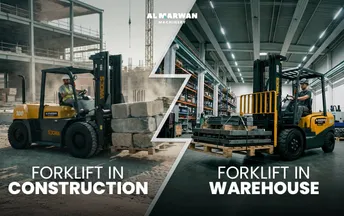
Warehouse vs Construction Forklifts: Why One Machine Can’t Do Both
At first glance, a forklift is a forklift. It lifts, carries, and places loads. But anyone who has w...
