


A sudden fluid puddle under a digger, loader, or earthmover is an immediate signal that a critical i...
Manual Operation or Semi-Autonomous Systems in Modern Heavy Equipment?
Jun 07 2026
By

From the early days of cable-operated cranes to today’s GPS-guided crawler excavators, heavy machinery has always evolved alongside construction itself. Yet one question remains at the center of every project manager’s mind:
Should you rely on manual operation, or step into the world of semi-autonomous systems?
In the UAE and across the GCC, contractors now face a mixed landscape: mega infrastructure projects, tight timelines, labor shortages, and rising safety standards. Choosing how your machines operate is no longer just about preference; it’s about productivity, cost control, and long-term competitiveness.
This guide breaks down:
- What manual and semi-autonomous operations really mean
- How each system performs on-site
- Where each makes the most sense
- How to choose the right approach
- Real-world context from Al Marwan Machinery
- FAQs for decision-makers
Whether you’re searching for heavy machinery near me, comparing heavy equipment machinery for sale, or exploring heavy construction equipment for rent, this article helps you decide what truly fits your operation.

Understanding the Two Operation Types
1. Manual Operation
Manual machines rely entirely on the operator’s skill, experience, and judgment. Every movement, boom lift, bucket curl, swing, travel for an excavator, and blade adjustment of a bulldozer is controlled directly from the cab, with no digital intervention guiding the process. The machine becomes an extension of the operator’s hands, reacting in real time to visual cues, ground resistance, and site dynamics.
Key characteristics:
- Full human control
- Immediate response to changing site conditions
- Lower upfront investment
- Minimal digital dependency
- Ideal for variable, unpredictable tasks
This mode of operation excels in environments where no two movements are the same, such as demolition, quarrying, marine works, or uneven terrain. Operators can instantly adapt to obstacles, material density, and visibility changes without waiting for systems to recalibrate.
Manual systems remain the backbone of the industry. Even today, most used construction equipment for sale operates in fully manual mode, proving that experience-driven operation continues to deliver reliability, flexibility, and strong return on investment, especially in rugged, high-impact applications.

2. Semi-Autonomous Systems
Semi-autonomous construction equipment blends human control with digital assistance. The operator still drives the machine, but intelligent systems continuously guide, correct, and optimize movements to improve accuracy, consistency, and safety. Instead of replacing the operator, the technology acts as a second set of eyes and hands inside the cab.
Common features include:
- Grade control (2D/3D) for precise depth and slope
- Auto-leveling to maintain flat surfaces
- Load sensing to prevent overloading
- Swing and height limits for safer operation
- Telematics and remote monitoring
- Assisted with digging paths and movement guidance
These systems reduce rework, minimize material waste, and standardize output across different operators. They are increasingly found in new excavators, dozers, and cranes, especially in high-precision environments such as infrastructure corridors, ports, airports, and large-scale earthworks, where millimeter-level accuracy and consistent productivity are critical to meeting project deadlines and quality standards.

Where Manual Operation Still Wins
Manual equipment remains unbeatable in environments where conditions change by the minute, and no two movements are ever the same. In these settings, human judgment, visual awareness, and instinct outperform even the most advanced algorithms.
Manual operation excels when:
- Terrain shifts constantly, and ground profiles are irregular
- Materials vary in density, moisture, or composition
- Demolition demands real-time decision-making and selective removal
- Marine or quarry work involves unpredictable resistance and visibility
- Custom-built attachments or modified booms are in use

At Al Marwan Machinery, many long-reach excavators and amphibious excavators are engineered specifically for such complex environments, dredging channels, shaping coastlines, and cutting into quarry faces. In these scenarios, experienced operators consistently outperform automated systems because they can “feel” the machine, anticipate resistance, and adjust instantly to what the ground reveals.
For these demanding tasks, manual systems offer clear advantages:
- Faster reaction to unexpected obstacles or material behavior
- Greater adaptability in tight, confined, or irregular work zones
- Lower dependency on sensors that may struggle in dust, mud, or water
- Easier field repairs with minimal electronic intervention
This is why used large excavators continue to perform reliably across UAE quarries, ports, and marine projects. Their strength lies not in software, but in the synergy between machine and operator, an asset that remains irreplaceable in heavy-duty, high-uncertainty environments.

Where Semi-Autonomous Systems Excel
Semi-autonomous equipment comes into its own when precision, repetition, and consistency define success. These systems thrive in structured environments where the goal is to produce the same result again and again, with minimal deviation.
They shine when:
- Precision directly affects project quality
- Repetition defines daily operations
- Design tolerances are tight
- Projects demand uniform output across long distances or large areas
Typical applications include:
- Road grading and highway preparation
- Trenching for utilities and pipelines
- Foundation leveling for buildings and infrastructure
Read our blog post on the role of driverless and autonomous heavy machinery in modern construction.

In mega-project environments across construction equipment UAE markets, contractors increasingly adopt machines equipped with:
- Grade control systems
- Automated depth and height limits
- Telematics for fleet-wide optimization
A practical example is a modern excavator equipped with a 2D or 3D grade control system. As the operator digs, the screen displays real-time depth and slope, preventing over-excavation and ensuring every trench meets design specifications. Similarly, dozers fitted with automated blade control can maintain consistent levels across kilometers of roadway, dramatically reducing rework and survey checks.
Frequently Asked Questions
1. Are semi-autonomous machines fully driverless?
No. Semi-autonomous machines still require a trained operator in the cab. The technology is designed to assist, not replace, human control. Systems guide movements, prevent over-cutting, and enhance safety, but the operator remains responsible for positioning, decision-making, and site awareness. In practice, the machine becomes smarter, not independent.
2. Do semi-autonomous machines cost significantly more?
The initial purchase price is higher compared to fully manual models. However, this gap is often recovered through reduced rework, lower fuel consumption, shorter operating cycles, and more consistent output. On large or long-term projects, these efficiency gains can outweigh the upfront investment within months.
3. Can manual machines be upgraded later?
Yes. Many modern manual machines are “upgrade-ready.” Depending on the model, contractors can add grade control systems, basic automation modules, or telematics at a later stage. This allows fleets to evolve gradually, starting manual and adding digital assistance as project demands change.
4. Are used machines compatible with digital systems?
In many cases, yes. A wide range of used large excavators can accept basic guidance or monitoring upgrades, particularly those from major OEMs. While they may not support full 3D automation, they can still benefit from depth indicators, slope guidance, or fleet-tracking systems.
5. Which is better for rental fleets?
Manual machines are ideal for short-term rental, where simplicity and operator familiarity are key. Semi-autonomous systems deliver more value in long-duration contracts or project-based rentals, where accuracy, repeatability, and data-driven performance justify the added technology.
Ready to Equip Your Next Project?
Whether you’re sourcing construction equipment UAE, exploring used construction equipment for sale, or planning your next rental, Al Marwan Machinery helps you choose machines that match your job, not just the trend.
From manual workhorses to semi-autonomous performers, our team ensures you invest in the right control system for every terrain, timeline, and task.
Contact Al Marwan Machinery today and build with confidence, whatever level of automation your project demands.
LEARN FROM OUR INDUSTRY EXPERTS
Latest news & updates
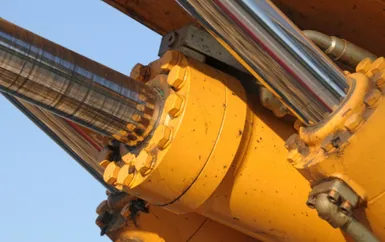
How to Spot Heavy Machinery Fluid Leaks Before They Cause Downtime
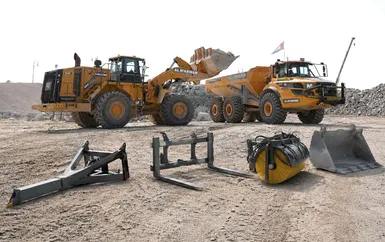
Wheel Loader Attachments That Turn One Machine Into Five
A wheel loader is already one of the most useful machines on any construction site. It loads, carrie...
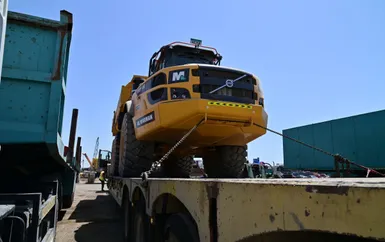
The Ultimate Guide to Buying an Articulated Dump Truck: Critical Tips
Investing in heavy machinery is one of the most significant capital expenditures a business can make...

The Loader Operator’s Blind Spot: Why Visibility Can Make or Break Site Safety
Wheel loaders are among the busiest machines on construction sites. They load trucks, move aggregate...
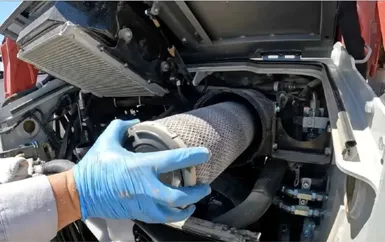
The Strategic Guide to Air Filtration: Protecting Your Heavy Machinery
Maintaining high-performance heavy machinery for sale requires a strategy that goes beyond simple o...
