


An excavator depends on hydraulic oil and hydraulic hoses to transfer power from its pumps to the bo...
Dubai Metro Gold Line: Dubai’s Next Underground Mobility Milestone
Apr 27 2026
By

From the world’s tallest tower to one of the world’s most advanced driverless metro systems, the city continues to think decades ahead. Now, the Roads and Transport Authority (RTA) has announced another major step forward: the Dubai Metro Gold Line, the first fully underground metro line in the city.
This is not just another metro extension. It is a Dh34 billion strategic infrastructure project designed to reshape daily commuting, reduce road congestion, connect growing communities, and strengthen Dubai’s position as a global leader in smart mobility.
Spanning 42 kilometres with 18 stations across 15 strategic areas, the new Gold Line is expected to serve 465,000 passengers daily and benefit nearly 1.5 million residents. It will also connect with the existing Red and Green Lines and integrate with Etihad Rail, creating a stronger national transportation ecosystem.
For the construction industry, this also means one thing: serious demand for heavy machinery.

What Is Dubai Metro Gold Line?
The Gold Line is Dubai’s first fully underground metro corridor, running at depths of up to 40 metres below the city.
Unlike elevated sections of the existing Red and Green Lines, this project will rely heavily on advanced tunnelling systems, making it one of the most technically complex transport developments in the emirate.
The line will run from Al Ghubaiba to Jumeirah Golf Estates, connecting major areas such as:
- Bur Dubai
- Al Satwa
- Business Bay
- Meydan
- Al Barsha South
- Jumeirah Village Triangle (JVT)
- Dubai Production City
- Jumeirah Golf Estates
It will also improve connectivity to 55 major real estate developments currently under construction.
This is why many industry experts are calling it one of Dubai’s most impactful infrastructure projects of the decade.

Why the Gold Line Matters
Dubai’s existing metro network already handles massive passenger volumes, but congestion, especially on the Red Line, has become a daily challenge.
The Gold Line directly addresses that.
One of its biggest operational benefits is reducing congestion on the Red Line between BurJuman and ONPASSIVE stations by 23 %. This corridor is currently one of the busiest stretches in the entire network.
The project will also:
- expand the metro network by 35%
- increase total stations from 67 to 85
- reduce nearly 40 million road trips annually
- improve multimodal transport connections
- support future urban expansion
The Etihad Rail Connection Changes Everything
One of the smartest parts of the Gold Line is its integration with Etihad Rail.
The metro will connect with the national railway network at Meydan and Jumeirah Golf Estates, allowing smoother movement between Dubai and the wider UAE. This transforms the project from a city transport solution into part of a national mobility strategy.
It supports Dubai’s long-term goal of becoming one of the world’s most connected urban economies.

Property Growth Around Gold Line Stations
Transport infrastructure always changes real estate value, and Dubai knows this well.
Communities along the Gold Line corridor such as JVC, JVT, Al Barsha South, MBR City, and Nad Al Sheba are expected to see property values rise by up to 20 % due to improved metro accessibility.
Better transport connections attract new residential projects, commercial towers, retail spaces, and mixed-use communities. Developers move faster, investors gain confidence, and contractors prepare for long-term construction demand.
This creates stronger demand for excavation works, piling operations, road development, utility infrastructure, material transport, and concrete supply. Every new development around these stations requires heavy groundwork before the visible structures begin.
And of course, that means more heavy equipment on site, working behind the scenes to support Dubai’s next phase of urban growth.
Heavy Machinery Behind the Gold Line Project
A fully underground metro line is not built with ordinary construction equipment. Projects like the Dubai Metro Gold Line depend on specialized heavy machinery from the first excavation to the final structural works.
Large crawler excavators such as the Kobelco SK850LC handle deep station excavation, utility diversion, and foundation preparation. Piling rigs like ABI Mobilram systems are essential for diaphragm walls, secant piling, and underground structural support before tunnelling begins.
Articulated dump trucks such as the Volvo A40G move massive volumes of excavation spoil and construction materials across the site, while crawler cranes like the Kobelco CK2750G-3 manage heavy lifting for precast segments, reinforcement cages, and station structures.
Concrete pumps also play a major role in underground construction, supporting continuous concrete placement for raft foundations, retaining walls, and underground slabs. CIFA concrete pumps are often preferred for these high-output infrastructure projects where speed and reliability are critical.

Al Marwan’s Role in Infrastructure Projects
At Al Marwan Machinery, supporting major infrastructure projects is part of daily operations.
From excavators and articulated dump trucks to crawler cranes, piling rigs, and concrete equipment, Al Marwan provides heavy construction equipment for sale and rent across the UAE and GCC.
With one of the region’s largest rental fleets, certified operators, and strong OEM partnerships with brands like Kobelco, CIFA, Dynapac, Sinoboom and Powerscreen, contractors gain the reliability needed for high-value infrastructure developments.
Whether it is metro construction, bridges, marine works, or large urban developments, equipment performance decides project speed.

Need Heavy Machinery for Major Infrastructure Projects?
Explore Al Marwan Machinery’s full range of heavy machinery, from excavators for sale, articulated dump truck rental, crawler cranes, piling rigs, and concrete equipment for sale and rent across the UAE.
Built for the region’s biggest projects. Ready for the next one.
LEARN FROM OUR INDUSTRY EXPERTS
Latest news & updates
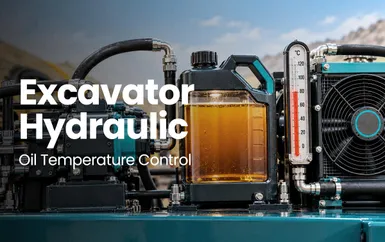
Why Hydraulic Oil Temperature Matters in Excavators
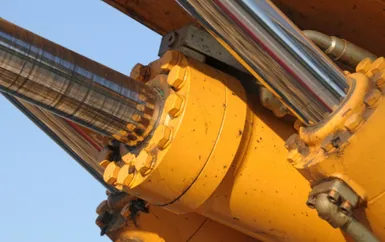
How to Spot Heavy Machinery Fluid Leaks Before They Cause Downtime
A sudden fluid puddle under a digger, loader, or earthmover is an immediate signal that a critical i...
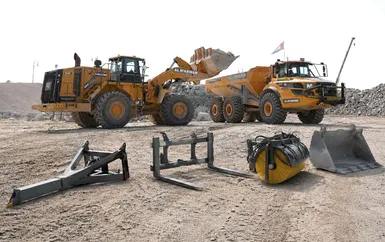
Wheel Loader Attachments That Turn One Machine Into Five
A wheel loader is already one of the most useful machines on any construction site. It loads, carrie...
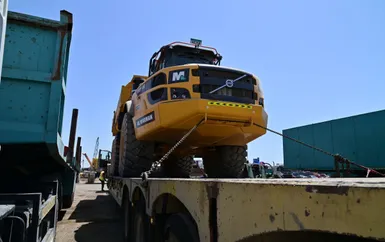
The Ultimate Guide to Buying an Articulated Dump Truck: Critical Tips
Investing in heavy machinery is one of the most significant capital expenditures a business can make...
The Loader Operator’s Blind Spot: Why Visibility Can Make or Break Site Safety
Wheel loaders are among the busiest machines on construction sites. They load trucks, move aggregate...
