


Caterpillar made massive waves at Bauma CONEXPO India 2026 by launching three powerhouse machines en...
Saudi Arabia Prepares King Fahd Stadium for FIFA 2034 with Major Renovation
Aug 26 2025
By

When Saudi Arabia secured the 2034 FIFA World Cup, the buzz wasn't just about football; it was about far-reaching infrastructure upgrades, led by AECOM, to bring King Fahd Sports City in Riyadh into the modern age. If you're curious about how this colossal project unfolds from a heavy equipment and machinery standpoint, let us take you through the journey.
1. Project Background
Originally opened in 1987, the iconic King Fahd Stadium (nicknamed "The Tent" or "Pearl of Stadiums") seated around 58,400 fans. Closed in 2023 for an extensive renovation, it’s undergoing a transformation to increase capacity to roughly 70,200 seats ahead of the 2027 AFC Asian Cup, and, crucially, to meet FIFA’s rigorous standards for the 2034 tournament.
AECOM, a Fortune 500 global infrastructure firm, has been appointed by Saudi Arabia’s Ministry of Sport to provide site supervision consultancy services chronologically through planning, design, engineering, and construction management. Their divisions, especially AECOM Hunt, bring in a portfolio of over 140 stadium projects, including U.S. facilities like SoFi Stadium and Mercedes‑Benz Stadium.

2. Budget & Infrastructure Scale
The original stadium cost SAR 1.912 billion (~US $510 million) when built in 1987. For the renovation, capacity is expanding from ~58,400 to ~70,200 seats; some reports mention up to 80,000 with broader campus redevelopment (e.g. retail, museum, green spaces, and bike paths).
Renovating a 70K‑seat venue plus adjacent precinct pushes total civil & structural overhaul into the hundreds of millions of dollars, demanding massive equipment deployment and logistics.
3. Construction Scope & Phasing
On the ground, the Saudi Binladin Group is handling the major expansion works, including seat expansion, structural upgrades, and roof enhancements. These efforts are coordinated in distinct stages:
- Demolition & site clearing: to make way for new tiers and expanded amenities.
- Foundation & substructure: reinforcing the base for increased spectator loads.
- Superstructure & seating: raising new tiers, ensuring sight-lines, and installing ergonomic seats.
- Roof: the existing iconic 247 m column-supported umbrella-style cover must be retrofitted for expanded reach.
- Finishes & systems: including HVAC, lighting, audio, broadcast, safety systems and final punch-list work.
No wonder AECOM’s heavy-hitters in consultancy, design, and construction management are steering this colossal ensemble of tasks.

4. Heavy Equipment & Machinery Play
A project of this magnitude demands a formidable lineup of heavy machinery; below is an overview of how heavy equipment enters the picture, and where heavy equipment dealers, machinery rental companies, and used machinery dealers come into play:
a. Earthmoving & Foundations
Excavators (30–50 ton class), bulldozers, swivel loaders, and backhoes handle initial site clearing, earth removal, and trenching for foundation works.
Soil compaction is managed by vibratory rollers and jumping jack compactors to ensure stable subsurface conditions before laying reinforced concrete.
b. Concrete & Structural Works
- Tower cranes (30–70 m reach), mobile crawler cranes, and boom trucks position steel trusses and concrete formwork.
- For pouring massive footings and columns, fleets of concrete mixer trucks, stationary pumps, and line pumps deliver over 100,000 m³ of concrete volume through phases.
- Concrete vibrators and scaffold systems ensure structural integrity and formwork accuracy.
c. Roof Retrofit
The historic wide-span canopy needs careful deconstruction and reinforcement. Telescopic handlers, mini-cranes, and material handling hoists are essential for roof membrane reinstallation and column modifications.
d. Finishes & Fit-Out
- Once the shell is up, scissor lifts, boom lifts, electric forklifts, and cherry pickers support façade installation, interior fit-out, and mechanical/electrical systems.
- Generators and compressors serve power and pneumatic tool needs.
These vast fleets mean project managers rely heavily on heavy machinery rental companies, equipment leasing, and coordination with heavy equipment dealers. Buying vs renting vs used machinery is a strategic decision; balancing schedule, cost, and maintenance capacity.

5. Sustainability & Safety in Machinery Choice
Aligned with Saudi Vision 2030 and AECOM’s commitment to environmental responsibility, the King Fahd Stadium transformation integrates sustainable construction practices at every level. Equipment deployed on-site includes machines fitted with Stage V and Tier 4 Final diesel engines to significantly reduce NOₓ and particulate matter emissions.
Hybrid excavators and cranes can be utilized for indoor tasks or night operations, minimizing both noise and environmental impact. To ensure machinery remains efficient and safe in Riyadh’s harsh climate, pre-emptive maintenance protocols are in place, supported by GPS fleet tracking, oil analysis, and real-time filter monitoring, to mitigate heat-related breakdowns and extend equipment life.
6. Tech Integration & Digitization
Technology strategies include:
- BIM coordination to model equipment staging, crane swing, and facility logistics.
- Fleet telematics for utilization tracking, especially important across phase transitions.
- Drones: used for aerial surveys and progress monitoring, reducing scaffolding needs.
- 3D scanning during demolition and excavation ensures precision grade control before concrete placement.
7. Challenges & Mitigation
Executing a mega project like the King Fahd Stadium redevelopment in Riyadh comes with several environmental and logistical challenges that demand proactive solutions.
The extreme desert climate can significantly reduce equipment lifespan, which is why heavy machinery is equipped with enhanced cooling systems and stored in shaded zones during idle hours. Dust is another major concern, especially during excavation and earthmoving phases, requiring constant use of wet suppression systems and frequent air filter servicing on all equipment.
To avoid site congestion, the delivery and storage of cranes, mixers, and transport trucks are meticulously scheduled, ensuring a smooth workflow. AECOM also places strong emphasis on operator readiness; only certified personnel are allowed to handle machines, with joint safety inspections regularly enforced.

Conclusion
From a construction point of view, the King Fahd Stadium transformation is a masterclass in mega-project machining:
- Tens of thousands of cubic meters of earth,
- Multistory steel-and-concrete structures,
- Iconic wide-span roofing systems,
- And high-tech interiors, all underpinned by access to heavy equipment machinery and integrated by AECOM’s expert oversight.
Rent Construction Machinery with Confidence through Al Marwan
Choose the right support partners. Choose Al Marwan Machinery, one of the region’s leading heavy machinery rental companies, holding the title of GCC rental company for 2025, offering a full fleet of equipment ready for your next big job. From excavators to jaw crusher for rent and everything in between, you can rent heavy machinery backed by certified operators, expert support, and flexible rental plans.
Explore our rental fleet today at almarwan.com and keep your project moving with confidence.
LEARN FROM OUR INDUSTRY EXPERTS
Latest news & updates
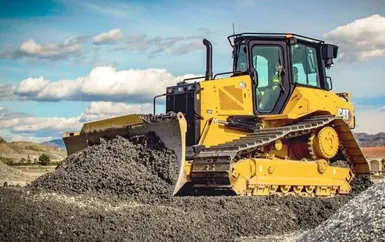
Caterpillar Unveils 3 New Machines at Bauma India 2026

Manlift Rental Checklist: What Contractors Should Ask Before Renting
Working at height is part of almost every construction, maintenance, installation, and facility mana...
Top 6 Technologies Transforming Heavy Machinery in 2026
The heavy equipment industry is undergoing its most significant shift since the invention of the hyd...
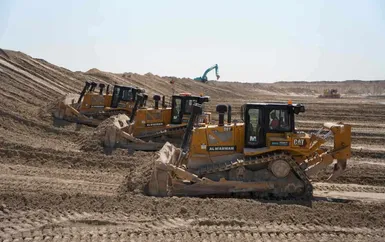
Used Bulldozers for Sale: What Contractors Should Inspect Before Buying
Buying a used bulldozer can be a smart move for contractors who need heavy pushing power without the...
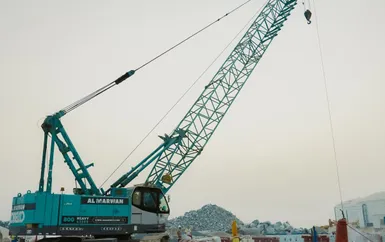
Navigating the 2026 Crane Market: Trends and Mistakes to Avoid
The heavy machinery landscape is shifting rapidly as we head into 2026. Buyers and project managers ...
