


Investing in heavy machinery is one of the most significant capital expenditures a business can make...
Caterpillar: Integrating LiDAR into Autonomous Fleet
Dec 03 2025
By

A New Frontier in Heavy Equipment Automation
Heavy-equipment companies are entering a new era of autonomy, one where machines not only lift and haul but also think and adapt. Caterpillar, a global leader in industrial equipment with 2024 revenues of $64.8 billion, has taken a bold leap by integrating cutting-edge LiDAR (Light Detection and Ranging) technology into its autonomous fleet. This strategic move, from the Cat® Command remote control systems to autonomous off-highway trucks, opens a transformative chapter for heavy machinery operations, especially in rugged environments like quarries and mining sites.
Why LiDAR Matters for Autonomous Heavy Machinery
LiDAR enables machines to “see” scanning environments in high resolution and create 3D models critical for navigation and obstacle detection. Caterpillar’s partnership with Luminar brings two Iris LiDAR units per off-highway truck, designed exclusively for Cat® hauling operations.
These sensors operate at the 1550 nm wavelength, far superior to the more common 905 nm sensors in delivering longer detection ranges and penetrating dusty, smoky environments typical of heavy industrial sites.
Designed to scan environments up to 600 m for reflective objects, the Iris LiDAR uses a 2-axis scanning system and custom Indium Phosphide detectors to achieve accuracy within 1 cm when paired with Luminar’s onboard AI processing chips.

Enhancing Safety, Productivity, and Efficiency
Caterpillar has long invested in autonomy; its trucks have traveled over 334 million kilometers across three continents, moving more than 9.3 billion tonnes autonomously.
Now paired with LiDAR's precision, these fleets can transform jobsite safety by dynamically detecting obstacles, both static and moving and adjusting paths in real time. This drastically reduces risks to human operators.
Productivity soars when machines handle repetitive hauling tasks autonomously, enabling continuous operation and freeing skilled operators to manage multiple machines or oversee operations enhancing overall jobsite efficiency.
From Remote Control to Full Autonomy
Caterpillar’s autonomy isn't about wholesale machine redesign; instead, it builds on existing “automation DNA.” For instance, D-Series CTLs already offer self-leveling, return-to-dig, and control-by-wire features. LiDAR, cameras, and smart autonomy layers improve dynamic path planning and make remote control intuitive, enabling one operator to manage up to four machines remotely.
Such semi-autonomous systems make remote job execution safer and less monotonous while reducing idle time and labor shortages on difficult sites.
Tough Conditions? No Problem.
Heavy machinery commonly operates in extremes: dust, mud, smoke, vibration, extreme temperatures, and debris. Caterpillar has refined LiDAR hardware and signal processing to maintain accuracy despite harsh environments.
Technologies include dust-resistant optics, thermal stabilization, and software filters to ignore false readings from particles. Similar approaches by other leaders (John Deere, Komatsu, Oshkosh) reinforce the importance of sensor ruggedness and tailored autonomy stacks for reliability.

Implications for Heavy Equipment Companies and Dealers
For heavy-machinery suppliers and dealers, these advancements herald new opportunities:
- Premium solutions: LiDAR-enhanced autonomous systems offer elite, safety-focused equipment that stands out from standard construction equipment for sale.
- Competitive edge: Dealers offering cutting-edge, autonomous-capable machines can command higher margins and attract forward-looking clients.
- Integrated systems: Suppliers can begin bundling sensor packages, remote-control infrastructure, and autonomy training services to meet rising demand for safer, more efficient heavy machinery fleets.
- Future readiness: As autonomy becomes more mainstream, early partnerships with OEMs like Caterpillar could position suppliers as go-to providers for next-generation construction solutions.
Real-World Use Case: Quarry Haulage Operations
In real-world quarry settings, Cat® off-highway trucks fitted with Iris LiDAR under the Cat Command platform automate haul cycles. They map work zones, detect obstacles, and communicate with fleet management systems to ensure safe, efficient operations without operator intervention for each move.
These capabilities reduce human presence in high-risk zones, streamline material transport, and support uninterrupted operations even during shift changes or night work enhancing uptime and reducing labor costs.

Looking Ahead: The Future of Autonomous Heavy Machinery
The partnership between Caterpillar and Luminar is a telling sign: autonomy is no longer limited to cars. It's a growing trend across heavy equipment companies, with OEMs embracing autonomy to mitigate labor shortages and improve safety.
Moving forward, we may expect:
- Fully autonomous site fleets, self-organizing based on job load.
- Sensor fusion combining LiDAR with radar, GPS, and cameras for enhanced perception.
- Overlayed jobsite mapping, with digital twins guiding machine paths.
- Operator roles evolving from drivers to coordinators overseeing multiple autonomous assets.
If you’re interested in future autonomy of heavy machinery, check our blog on driverless heavy machines and drones in construction sites.
In a nutshell
Caterpillar’s integration of Luminar’s Iris LiDAR into its Cat Command autonomous fleets marks a milestone in heavy machinery evolution, blending safety, efficiency, and intelligence. For heavy-equipment companies, dealers, and suppliers like Al Marwan Machinery, this signals both opportunity and responsibility. By adopting, promoting, and supporting autonomous-capable machinery, firms can future-proof their offerings and lead their markets into a safer, smarter era of construction.
Whether you’re searching for construction equipment for sale, exploring options from heavy machinery dealers, or looking to partner with a heavy machinery supplier ready for tomorrow’s demands, autonomy-ready, LiDAR-equipped machines are here, reshaping the industry for the better.
Check our news section for more information on futuristic heavy equipment.
LEARN FROM OUR INDUSTRY EXPERTS
Latest news & updates
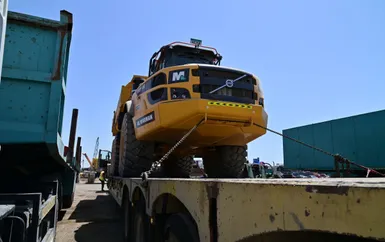
The Ultimate Guide to Buying an Articulated Dump Truck: Critical Tips
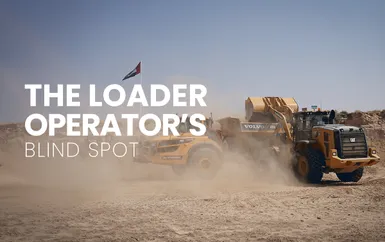
The Loader Operator’s Blind Spot: Why Visibility Can Make or Break Site Safety
Wheel loaders are among the busiest machines on construction sites. They load trucks, move aggregate...
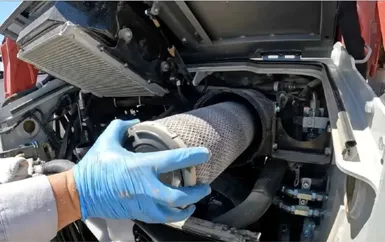
The Strategic Guide to Air Filtration: Protecting Your Heavy Machinery
Maintaining high-performance heavy machinery for sale requires a strategy that goes beyond simple o...
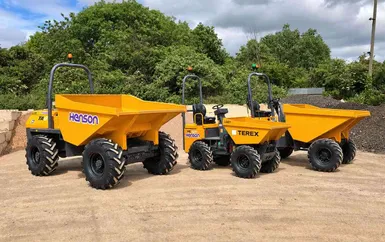
Dumper Applications Across Construction Sites
On busy construction sites, moving material is not always about using the biggest truck available. I...
Machinery Maintenance 101: Keeping Your Fleet Running Longer
In the fast-paced world of construction and infrastructure, your machinery is the heartbeat of your...
