


A wheel loader is already one of the most useful machines on any construction site. It loads, carrie...
Pallet Jack vs. Forklift: A Technical Guide for Material Handling
Dec 31 2025
By

In industrial facilities, warehouses, and construction environments, selecting the appropriate material-handling equipment is central to operational efficiency and worker safety. Although pallet jacks and forklifts serve similar purposes, they differ substantially in engineering design, capacity, mobility, and performance. Understanding these distinctions is essential for technical teams looking to optimize workflow and reduce downtime.
At Al Marwan Heavy Machinery, we assist operators, contractors, and procurement teams in choosing between different classes of lifting equipment. As the authorized dealer of SOCMA forklifts in the UAE, Al Marwan provides advanced lifting solutions that meet industrial requirements for efficiency, reliability, and operational control. This technical guide outlines the critical factors separating pallet jacks from forklifts, helping professionals determine which machine is more suitable for their work environment.
Understanding the Engineering Differences
Design and Construction Principles
A pallet jack is engineered as a compact, low-profile tool intended primarily for horizontal load transport. Its hydraulic pump, steering tiller, and fork structure are designed to raise pallets only a few centimeters—just enough to permit movement. The mechanical simplicity is deliberate; these devices offer straightforward functionality, minimal components, and limited maintenance requirements.

A forklift, in contrast, is a fully engineered vehicle equipped with a powertrain, hydraulic lifting system, mast assembly, and counterweight. Its structural design enables significant vertical movement and the handling of heavy or unbalanced loads. Forklifts incorporate advanced safety features, stability controls, and—depending on the model—electric, diesel, or LPG-driven systems. These differences illustrate why pallet jacks and forklifts, although used for material handling, occupy very different performance categories.

Load Capacity and Performance Capabilities
Pallet jacks typically support loads between 1,000 and 3,500 kg, depending on whether they are manual or electric. Their lifting mechanism is not intended for substantial vertical height but rather for short-distance movement of palletized loads. Their limited capacity makes them suitable for warehouses, retail spaces, and controlled indoor environments.

Forklifts, however, can lift significantly heavier loads. Depending on the class and model, forklifts can support anywhere from 1 ton to more than 50 tons, making them indispensable in logistics terminals, industrial warehouses, construction zones, and heavy manufacturing facilities. Forklifts can raise loads several meters high, enabling stacking, racking, and container loading operations—tasks impossible for pallet jacks.

This variation in capacity explains why forklifts are considered true heavy construction machinery, whereas pallet jacks function as basic warehouse tools.
Operational Range and Travel Conditions
A pallet jack performs optimally over smooth, level surfaces such as warehouse floors. Its wheel configuration and steering geometry are not designed for uneven terrain or outdoor conditions. Operators use pallet jacks primarily for short-distance load transfers, small product movements, and tasks requiring maneuverability in tight spaces.
Forklifts are engineered for greater operational versatility. Depending on the type—such as counterbalance forklifts, reach trucks, or rough-terrain forklifts—they can operate indoors, outdoors, and across unpaved or uneven ground. Their ability to cover longer travel distances while maintaining load stability makes forklifts essential for large facilities and external yards.
In applications where the worksite includes obstacles, ramps, or changing terrain conditions, forklifts provide far superior control, traction, and operational safety.
Precision, Maneuverability, and Control
Pallet jacks offer straightforward maneuverability because of their compact form. Manual models rely entirely on operator strength and steering control, while electric pallet jacks integrate powered movement for improved handling. However, their turning radius, speed, and directional precision remain limited when compared to forklifts.

Forklifts incorporate advanced control systems that enable precise load placement, controlled acceleration, and stable turning under load. Electric forklifts—including SOCMA forklifts offered through Al Marwan Heavy Machinery—may include electronic speed controls, hydraulic precision valves, load sensors, and improved visibility features. These technological capabilities position forklifts as more suitable for tasks requiring accuracy, such as stacking heavy materials at elevated heights.
Safety Considerations and Operator Requirements
Because pallet jacks operate at ground level and move at low speeds, the risk of severe incidents is reduced. Training requirements are minimal, and operators typically learn basic handling quickly. However, improper use can still lead to strain injuries, pinch hazards, or impact accidents, especially when manual jacks are overloaded.

Forklifts, on the other hand, require specialized operator certification. Their higher lifting capacity, faster travel speeds, and vertical movement introduce risks such as tip-overs and load instability. Professional training ensures operators understand counterweight principles, load centers,hydraulic controls and proper PPEs. As a responsible heavy equipment supplier, Al Marwan ensures proper guidance and operational recommendations accompany every forklift purchase.
Cost, Maintenance, and Lifecycle Considerations
From an investment standpoint, pallet jacks represent a low-cost solution with minimal maintenance requirements. Their hydraulic components and simple design reduce long-term operational expenses, making them advantageous for small facilities or operations with lower lifting demands.
Forklifts demand higher upfront investment and ongoing maintenance. Fuel consumption (in diesel or LPG models), battery management (for electric forklifts), hydraulic servicing, and tire replacement all contribute to the lifecycle cost. Nevertheless, forklifts deliver significantly greater productivity, making the investment justified in high-volume or heavy-load environments.

When evaluating heavy equipment machinery for sale, cost must be considered in relation to operational requirements—not simply the purchase price.
Selecting the Right Machine for Your Worksite
Choosing between a pallet jack and a forklift is not merely a question of preference; it is a matter of engineering suitability. The correct selection depends on several operational variables:
- Load weight and size
- Required lifting height
- Facility size and layout
- Surface and terrain conditions
- Frequency of operations
- Safety requirements
In environments where limited vertical movement is required and loads are moderate, a pallet jack effectively fulfills operational needs. However, in facilities requiring vertical stacking, outdoor loading, or the handling of large or heavy materials, forklifts are the more strategic choice.
Al Marwan's access to SOCMA forklifts—recognized for their structural durability, high-capacity lifting systems, and operator-focused engineering—provides buyers with reliable, high-performance machines suitable for demanding work environments.
The Role of Technology in Material Handling
Modern forklifts integrate advanced technologies such as telematics, operator assistance systems, improved hydraulic efficiency, and load monitoring sensors. These features enhance safety, reduce downtime, and improve operational precision. Electric forklifts, in particular, have gained prominence for their reduced emissions, lower noise levels, and improved environmental performance.
Pallet jacks, although simpler, have also evolved. Electric pallet jacks offer increased travel speed, reduced operator strain, and integrated braking systems. However, their technological advancements remain modest compared to the innovations driving the forklift sector forward.
This technological gap reinforces forklifts as essential assets for operations seeking long-term performance from their heavy equipment for sale.
Why Al Marwan Recommends Forklifts for Industrial Applications
As the official SOCMA dealer in the UAE, Al Marwan supports businesses in selecting lifting equipment based on engineering performance, safety considerations, and long-term operational needs. SOCMA forklifts, known for their high structural integrity and advanced hydraulic systems, provide reliable solutions for industries requiring robust lifting capabilities.

The decision between a pallet jack and a forklift depends on the scale, frequency, and complexity of the material-handling tasks. Pallet jacks offer simplicity and cost efficiency for low-intensity operations, while forklifts provide versatility, strength, and advanced engineering capabilities for demanding environments. In industries requiring consistent performance, higher lifting capacities, and operational durability, forklifts remain the superior choice.
Why Partner with Al Marwan Heavy Machinery?
At Al Marwan Heavy Machinery, we don’t just provide heavy equipment for sale—we deliver complete solutions. As the official SOCMA dealer in the UAE, we ensure that our clients benefit from:
- Access to the latest models, tailored for heavy-duty operations.
- Expert advice from industry professionals who understand the unique challenges of regional projects.
- Full after-sales support, including spare parts, servicing, and technical assistance.
- Flexible purchasing options that make it easier for businesses of all sizes to acquire world-class equipment.
Our goal is to ensure that every investment you make in heavy equipment contributes to long-term efficiency, profitability, and success.
Contact us today to learn more.
FAQ
1. Can a pallet jack replace a forklift?
Not in most industrial settings. A pallet jack cannot lift heavy loads or reach significant heights, making it unsuitable for operations requiring vertical stacking or high-capacity transport.
2. Are electric pallet jacks a viable alternative to forklifts?
Electric pallet jacks improve efficiency over manual versions, but they still lack the lifting power and versatility of a forklift.
3. What industries benefit most from forklifts?
Construction, manufacturing, warehousing, logistics terminals, and industrial plants rely heavily on forklifts due to their load-handling capabilities and durability.
4. How does Al Marwan support forklift buyers?
As an authorized SOCMA dealer, Al Marwan provides equipment expertise, technical assessments, and access to reliable, high-performance forklifts tailored to professional requirements.
LEARN FROM OUR INDUSTRY EXPERTS
Latest news & updates
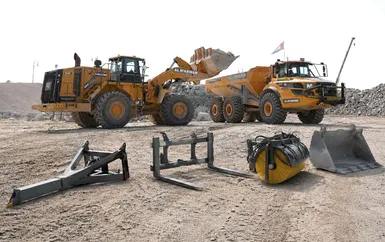
Wheel Loader Attachments That Turn One Machine Into Five
The Ultimate Guide to Buying an Articulated Dump Truck: Critical Tips
Investing in heavy machinery is one of the most significant capital expenditures a business can make...
The Loader Operator’s Blind Spot: Why Visibility Can Make or Break Site Safety
Wheel loaders are among the busiest machines on construction sites. They load trucks, move aggregate...
The Strategic Guide to Air Filtration: Protecting Your Heavy Machinery
Maintaining high-performance heavy machinery for sale requires a strategy that goes beyond simple o...
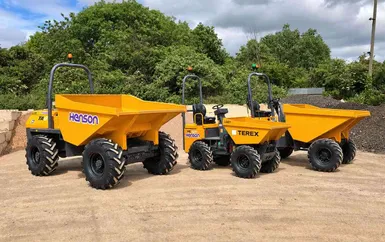
Dumper Applications Across Construction Sites
On busy construction sites, moving material is not always about using the biggest truck available. I...
