


Every iconic skyline, mega-bridge, and deep-water port starts with a single, crucial moment: driving...
Choose the Right Bucket for Your Wheel Loader
Apr 14 2026
By

When you’re in the market for heavy equipment for sale, such as a wheel loader, it’s not just about the machine’s size or engine power—it’s about the attachments and how well they match your job. Here’s a breakdown of the key points you need to know—and how they translate to smarter equipment buying and usage.
Why Bucket Selection Matters
Choosing the right bucket pays off every time. The correct bucket type and front-edge can significantly increase productivity, reduce operating costs, and extend the wear life of your machine.
You can frame bucket selection with three key steps:
1. Find the application that is closest to your jobsite material and conditions.
2. Select the recommended bucket type for that application.
3. Size the bucket to your machine, taking into account the material’s density and your loader’s size.
Getting this right means your wheel loader will perform efficiently, fuel use will stay in check, and wear on tires, undercarriage, and bucket will be minimized. When you're looking at heavy equipment for sale, these factors enhance the value proposition of the machine.
Recommended Bucket Type by Material
Different materials demand different bucket designs.

Bolt-on cutting edges offer great penetration and smooth floor results—ideal for general loading.
Serrated edges improve grip in compacted or rocky soils.
For abrasive materials, the two-strap heavy-duty rock system provides superior wear resistance.
And in extreme conditions like granite or heavy rock, the flush-mount heavy-duty system delivers maximum durability and minimal maintenance—ensuring your heavy equipment for sale performs efficiently in any terrain.
Each bucket type is engineered to match specific material demands—ensuring higher efficiency, reduced wear, and better performance on the job site.
Recommended Bucket Type by Application
When you’re handling a softer material such as topsoil, silt, clay, or loam—or bank-loading gravel or coal seams where the material fragmentation is low to moderate, impact is low, and abrasion is moderate—a General Purpose bucket is the ideal choice. It’s built for excavation, bank loading, and stockpiling under these conditions with efficient structure and geometry.

If the material is looser and lower density—such as sand, gypsum, fine gravel, or woodchips, where fragmentation is low, impact is low, and abrasion is moderate to high—a Material Handling bucket is most suitable. These buckets often feature flat floors and are designed for re-handling and stockpile loading of light material.

For more demanding work—such as face loading of shot or broken limestone, dolostone, basalt, or granite—where the material fragmentation is moderate to high, impact low to moderate, and abrasion high, you’ll want a Rock bucket. These are designed for digging and handling heavier rock material under more severe conditions.
And when you face the toughest environments—high-impact, high-abrasion quarry rock, aggregates, or mining operations—the choice moves to a Heavy-Duty Rock bucket. These offer maximum abrasion resistance, heavy-duty build, and longest wear life in the most punishing jobs.

Selecting the correct bucket style based on material type, fragmentation, impact, and abrasion is what drives productivity and controls costs.
Operator Tips to Maximize Productivity & Save Fuel
Here are eight practical operator tips lifted and adapted from the Cat guide that help you get more from your loader (and by extension, boost the value of your purchase or resale when you buy heavy equipment):
1. Position the truck at 45 degrees: When loading trucks, angle the truck at about 45° to the face of the material. This helps minimize loader movement and reduces cycle time.
2. Straight-on approach: The loader should approach the material face squarely so both sides of the bucket engage at the same time. That helps fill the bucket fully and avoids side forces that increase wear.
3. Use first gear on approach: Approach the material in first gear at a steady speed. This gives high torque with less wheel-spin and better control.
4. Minimize ground contact: The bucket’s cutting edge should not contact the ground more than about 15-40 cm before the material face. That reduces wear, avoids contamination of material, and saves fuel.

5. Keep edge parallel to ground: To get a full bucket, keep the cutting edge parallel to the ground, and just before curling the bucket, lift it slightly. This reduces unnecessary contact and friction.
6. Avoid wheel-spinning: Wheel spinning wastes tyres, fuel and reduces machine life. Good technique in first gear helps prevent this.
7. Avoid chasing the load: Instead of “chasing” material up the face, adopt the sequence: penetrate - lift - curl. This is the most fuel-efficient method to fill the bucket.
8. Keep the floor clean: A clean loading floor helps maintain good momentum, reduces spills when reversing with a full bucket, and reduces fuel consumption. Avoid spinning tires and aggressive moves.
Implementing these tips will help your loader run efficiently and preserve machine condition—important when you’re looking to buy or sell heavy equipment for sale.
Implications for Buying or Selling Heavy Equipment
If you’re shopping for heavy equipment for sale—or preparing to sell—keep these points in mind:
- Ask what bucket type and front-edge was used on the machine. A machine used with the correct bucket for the job will typically show less wear.
- Compare material conditions: If the machine has been used in abrasion-heavy material with a general-purpose bucket, wear may be accelerated.
- Check machine hours, but also check how the machine was matched with attachments: correct bucket type + appropriate size = better value and lower lifecycle cost.
- For resale, highlight that the machine had a bucket and edge matched to its job. That adds credibility and value.
For purchase, don’t just look at the machine model and size—look at attachments, bucket history, and how job conditions were managed.
Efficiency matters: less fuel, less wear, fewer passes = better productivity. That directly affects the cost of ownership.

When you’re acquiring heavy equipment for sale, especially a wheel loader, it’s vital to look beyond the machine alone. The bucket you use, how it is matched to the material, and how it is used day-to-day are key factors in productivity, cost, and ultimately value.

Partner with Al Marwan for the Right Attachment
At Al Marwan Machinery, we don’t just offer heavy equipment for sale — we provide complete solutions. Our team of experts will help you choose the right attachment for your machine and material, ensuring maximum productivity, efficiency, and safety. From buckets and couplers to specialized tools, every attachment is backed by trusted brands and expert support—so your fleet always performs at its best.
Al Marwan Machinery
Leading heavy machinery provider in the GCC since 1978. Recognized as the GCC Rental Company of the Year for three consecutive years (2023, 2024, 2025), Al Marwan is the trusted one-stop shop for construction projects across the UAE, Saudi Arabia, and Oman. As an authorized dealer for brands like Kobelco, Powerscreen, Dynapac, Sinoboom, Socma, and CIFA, we offer a comprehensive suite of services covering the entire machinery lifecycle:
- New Heavy Equipment: As an authorized dealer, Al Marwan offers access to the latest models of excavators, crawler cranes, crushers, concrete pumps, and more. All new machinery comes backed by manufacturer warranties.
- Heavy Equipment Rental Fleet: Access one of the largest construction equipment rental fleets in the Middle East, featuring 3500+ machines and certified operators. This allows clients to scale operations efficiently, minimizing capital expenditure.
- Used Heavy Equipment: We offer a curated selection of used equipment from global leaders like Caterpillar, Volvo, Komatsu, and Hitachi. Each piece undergoes rigorous inspection and maintenance to guarantee optimal performance and reliability.
- Expert Support & Maintenance: Al Marwan provides comprehensive after-sales support and maintenance services to ensure the long-term performance and reliability of your investments.
Frequently Asked Questions
How do I choose the right bucket for a wheel loader?
Choosing the right bucket depends on a three-step process:
- Identify the material: Determine the density and abrasiveness of what you are moving.
- Match the bucket type: Select a design (General Purpose, Rock, or Material Handling) built for that specific application.
- Check machine compatibility: Size the bucket based on your loader’s lift capacity and the material’s weight.
What is the best bucket for loading sand and loose gravel?
For low-density materials like sand, gypsum, or woodchips, a Material Handling bucket is the best choice. These buckets feature flat floors designed specifically for re-handling and stockpile loading, allowing for maximum volume and cleaner floor cleanup.
When should I use a Rock Bucket vs. a Heavy-Duty Rock Bucket?
- Rock Buckets are designed for face-loading broken limestone, basalt, or granite where abrasion is high, but impact is moderate.
- Heavy-Duty Rock Buckets should be used for extreme mining or quarry environments. They feature maximum abrasion resistance and reinforced builds to handle the most punishing high-impact conditions.
How does bucket selection affect heavy equipment resale value?
Bucket selection is a key indicator of how well a machine was maintained. A wheel loader paired with the correct attachment typically shows less strain on the engine and undercarriage. When selling, highlighting that the machine was operated with application-specific buckets adds credibility and can command a higher price.
Which bucket edge is best for rocky or compacted soil?
For compacted soils or rocky terrain, serrated edges are recommended because they provide better penetration and grip. If you are working with extreme abrasives like granite, a flush-mount heavy-duty system is preferred to minimize maintenance and extend the bucket's wear life.
Does the bucket size impact tire wear?
Yes. An improperly sized or poorly matched bucket can lead to wheel-spinning. When the bucket cannot penetrate effectively, operators often over-accelerate, which causes unnecessary friction and drastically reduces the lifespan of expensive loader tires.
LEARN FROM OUR INDUSTRY EXPERTS
Latest news & updates
Piling Machine Guide: Top Suppliers and Selection Strategies
Why Hydraulic Oil Temperature Matters in Excavators
An excavator depends on hydraulic oil and hydraulic hoses to transfer power from its pumps to the bo...
How to Spot Heavy Machinery Fluid Leaks Before They Cause Downtime
A sudden fluid puddle under a digger, loader, or earthmover is an immediate signal that a critical i...
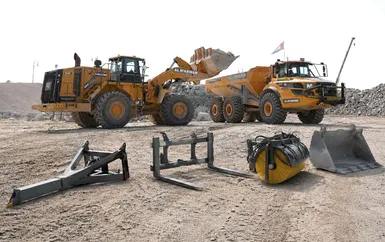
Wheel Loader Attachments That Turn One Machine Into Five
A wheel loader is already one of the most useful machines on any construction site. It loads, carrie...
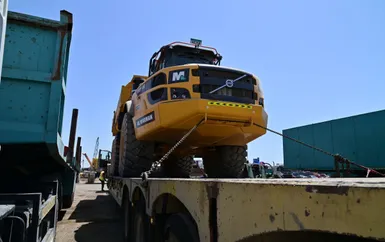
The Ultimate Guide to Buying an Articulated Dump Truck: Critical Tips
Investing in heavy machinery is one of the most significant capital expenditures a business can make...
