


A sudden fluid puddle under a digger, loader, or earthmover is an immediate signal that a critical i...
Forklifts in Automated Yards: Where Automation Meets Reality
Jun 25 2026
By

Across logistics yards, ports, warehouses, and industrial zones in the GCC, one thing is clear: throughput is becoming the new competitive edge. Faster loading. Shorter dwell times. Fewer bottlenecks. Less human fatigue.
To meet these demands, facilities are turning to automation in loading bays, trailer handling, material handling inside warehouses, from automated dock levelers and conveyor-fed bays to self-guided trailer positioning systems and smart yard management software.
These systems are transforming how goods move in and out of facilities. They reduce manual steps, minimize delays, and create predictable, repeatable workflows. A truck no longer waits for manual alignment. A pallet no longer travels across three zones before being staged. Sensors, rollers, and software now handle what once took several operators.
But here’s the reality many glossy automation brochures avoid:
Automation doesn’t replace conventional forklifts.
It changes how forklifts work.
And that shift is exactly where productivity gains happen.

What “Automated Loading” Really Looks Like
In modern yards, automation typically appears in three zones:
1- Dock-Level Automation
Hydraulic dock levelers, telescopic lips, and auto-locking systems align trailers in seconds. No manual ramps. No repeated repositioning.
2- Conveyor & Roller Systems
Pallets and cartons move directly from warehouse lanes into trailers using gravity rollers or powered belts. Human lifting drops dramatically.
3- Trailer Handling Systems
Automated yard tractors or guidance rails move trailers into bays with millimeter precision.
The result?
A smoother, more predictable loading cycle, where forklifts are no longer trapped in low-value tasks like:
- Repeatedly aligning pallets
- Shuttling goods across long internal distances
- Waiting for docks to be prepared
- Reversing trailers for every load cycle
Instead, forklifts are freed to do what they do best.

Why Forklifts Become More Valuable, Not Less
Automation does not eliminate variability. Real sites still deal with mixed pallet sizes, damaged packaging, last-minute order changes, oversized goods, irregular loading patterns, and tight staging zones. These are not edge cases; they are daily realities across warehouses, ports, and industrial yards.
No automated system can adjust a tilted load on the fly, retrieve a last-minute pallet from deep racking, reconfigure a mixed trailer load, operate safely in semi-finished yards, or adapt instantly to unpredictable site conditions. That is where forklifts remain irreplaceable.
In automated environments, forklifts shift from being simple transport tools to becoming precision enablers. They feed conveyors with perfectly aligned pallets, manage staging buffers between zones, handle non-standard cargo, support overflow during peak hours, and recover the exceptions that automation cannot process.
Instead of wasting time on repetitive movement, operators focus on high-value handling. This is how automation reduces forklift workload while boosting total site throughput.

Throughput Gains Come From Flow, Not Replacement
The biggest performance gains don’t come from removing forklifts.
They come from removing friction.
Automation removes:
- Idle waiting at docks
- Traffic congestion
- Repeated travel paths
- Manual alignment delays
- Human error in sequencing
Forklifts then operate in:
- Shorter, defined cycles
- Cleaner traffic lanes
- Safer, controlled zones
- Faster turnover intervals
A site that once loaded 18 trailers per shift can now handle 25–30 trailers per shift, with the same number of forklifts.
The machines didn’t disappear.
Their impact multiplied.

What This Means for Equipment Selection
As automation reshapes loading yards, forklifts must evolve with the environment. Modern sites demand:
- Higher stability during rapid cycles
- Precision control in narrow staging lanes
- Smooth hydraulic response
- Operator comfort during intensive shifts
- Durability under continuous operation
This is where professional-grade material handling equipment for sale becomes a strategic investment, not a commodity purchase.
Forklifts today are no longer just lifting tools.
They are interfaces between automation and reality.
Where Automation Ends, Performance Begins
As loading yards become smarter, forklift requirements change with them. In automated environments, machines are no longer judged by lifting capacity alone. They are evaluated by how well they integrate into high-speed, high-precision workflows.
Modern facilities now look for forklifts that deliver:
- Rapid cycle performance without overheating
- Flexible attachments that maximize productivity
- Smooth hydraulic control for precision feeding
- Stability in narrow, high-density staging zones
- Operator comfort for extended, intensive shifts
- Durability under continuous operation
Because in an automated yard, every second matters.
A delayed lift can stall an entire loading lane.

Why High-Throughput Sites Choose SOCMA Machinery
SOCMA forklifts are engineered for exactly this reality. Designed for industrial-scale logistic tasks, ports, and construction supply chains, SOCMA machinery focuses on heavy-duty chassis for continuous operation, stable mast systems for precision placement, responsive hydraulics for rapid load cycles, ergonomic cabins that reduce operator fatigue, and full compatibility with attachments and custom workflows.
A strong example is SOCMA HNF20–HNF500 diesel forklift range, widely used in high-volume yards and industrial depots. These models combine high-torque engines with advanced hydraulic systems that deliver smooth, fast lifting even under continuous load cycles. Features such as load-sensing hydraulics, reinforced masts, wide-stance axles for lateral stability, and high-visibility cabins allow operators to position pallets with millimetric accuracy, crucial when feeding conveyors or staging loads in tight automated lanes. Optional side-shifters, fork positioners, and clamp attachments further adapt the machine to mixed-load environments.
In automated yards, forklifts become interfaces, connecting conveyors, docks, racks, and trailers. SOCMA machinery excels in these transitional roles, where machines must react to real-world variability without slowing down the system. They don’t compete with automation; they complete it.

Automation Doesn’t Remove Labor. It Redefines It.
The narrative that “robots will replace forklifts” misunderstands how real sites operate.
Automation removes wasted motion. Forklifts remove uncertainty.
No conveyor can:
- Interpret a damaged pallet
- Re-balance an uneven load
- Recover a misaligned shipment
- Adapt to changing site geometry
- Respond to unpredictable demand
Operators move from repetitive transport to skilled handling.
Machines move from brute force to precision tools.
Choosing the Right Partner in a Smarter Yard
As GCC logistics and industrial sites modernize, businesses are searching for:
Forklifts for sale in UAE
Material handling equipment for sale
Machines ready for automated workflows
At Al Marwan Machinery, we understand how automation reshapes real operations. We don’t just supply forklifts, we help businesses select machines that fit their workflow, not just their floorplan.
As the authorized distributor of SOCMA machinery in the UAE, we provide:
- Heavy-duty forklifts engineered for high-throughput sites
- Expert consultation on fleet configuration
- Machines ready for automated environments
- Full after-sales support, parts, and service
- Flexible options for purchase and deployment
Whether you are upgrading a warehouse, expanding a logistics hub, or modernizing a loading yard, our team helps you align your equipment with your operational future.
LEARN FROM OUR INDUSTRY EXPERTS
Latest news & updates
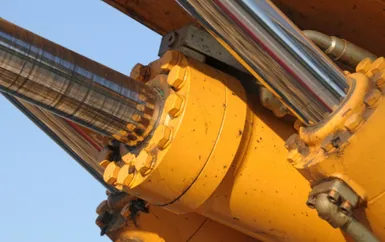
How to Spot Heavy Machinery Fluid Leaks Before They Cause Downtime
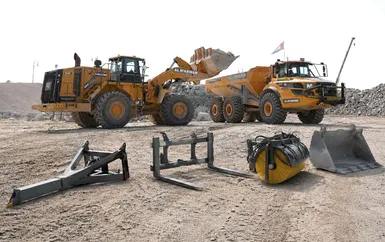
Wheel Loader Attachments That Turn One Machine Into Five
A wheel loader is already one of the most useful machines on any construction site. It loads, carrie...
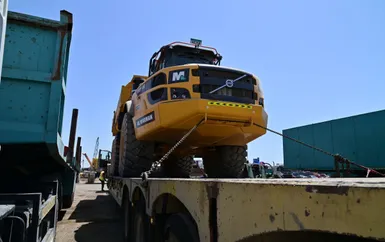
The Ultimate Guide to Buying an Articulated Dump Truck: Critical Tips
Investing in heavy machinery is one of the most significant capital expenditures a business can make...
The Loader Operator’s Blind Spot: Why Visibility Can Make or Break Site Safety
Wheel loaders are among the busiest machines on construction sites. They load trucks, move aggregate...
The Strategic Guide to Air Filtration: Protecting Your Heavy Machinery
Maintaining high-performance heavy machinery for sale requires a strategy that goes beyond simple o...
